If SEO helps websites rank on Google, ASO (App Store Optimization) helps apps rank in the App Store and Google Play. The goal is simple: get more qualified users to find your app — and install it.
Below is a practical 12-step framework you can follow, with interactive tools and a real-world example along the way.
Step 1: Define the goal before you optimize
Start with one primary objective. Without a clear goal, ASO becomes guesswork. Pick yours:
Step 2: Capture your baseline metrics
Before you change anything, document current performance — impressions, tap-through rate (TTR), install conversion rate (CVR), keyword rankings, ratings and reviews, and D1 / D7 / D30 retention. This gives you a true before-vs-after measurement.
Try it: enter your current numbers, click Set as baseline, then move the sliders to see how much each improvement is worth.
Step 3: Understand search intent
Most teams describe their app differently than users search for it. Your job is to map real user intent to store language.
Ask yourself three questions:
- What problem is the user trying to solve?
- What exact words do they type in search?
- What outcome are they expecting?
Step 4: Analyze top competitors
Audit the top-ranking apps for your target keywords. Competitor analysis helps you find gaps you can win.
Tip: the 1–3 star reviews of your competitors are a free list of features and messages you can win on.
Step 5: Build a keyword strategy
Choose keywords using three filters: relevance, search demand and ranking difficulty. Then build a balanced mix:
| Example keyword (habit tracker app) | Relevance | Demand | Difficulty | Bucket |
|---|---|---|---|---|
| habit tracker | High | High | High | Core |
| daily routine planner | High | Medium | Medium | Mid-volume |
| habit tracker with streaks | High | Low | Low | Long-tail |
Step 6: Optimize metadata fields
Use keywords naturally in the strongest fields. Focus on clarity and relevance — keyword stuffing hurts readability and conversion. Switch between stores:
Step 7: Improve creative assets for conversion
Ranking gets visibility. Creatives get installs.
Prioritize the icon (clear and recognizable at small size), the first two screenshots (they must communicate value immediately) and a preview video that is short, benefit-led and product-first. Your store page should answer in seconds: “Why should I install this app?”
Step 8: Strengthen ratings and review flow
Ratings and reviews impact trust and conversion — and ASO and product quality are tightly connected.
Step 9: Localize for growth markets
Localization is not just translation — it is market adaptation. Localize your keywords, metadata, screenshot text and value-proposition framing. A localized page often outperforms a one-size-fits-all global listing.
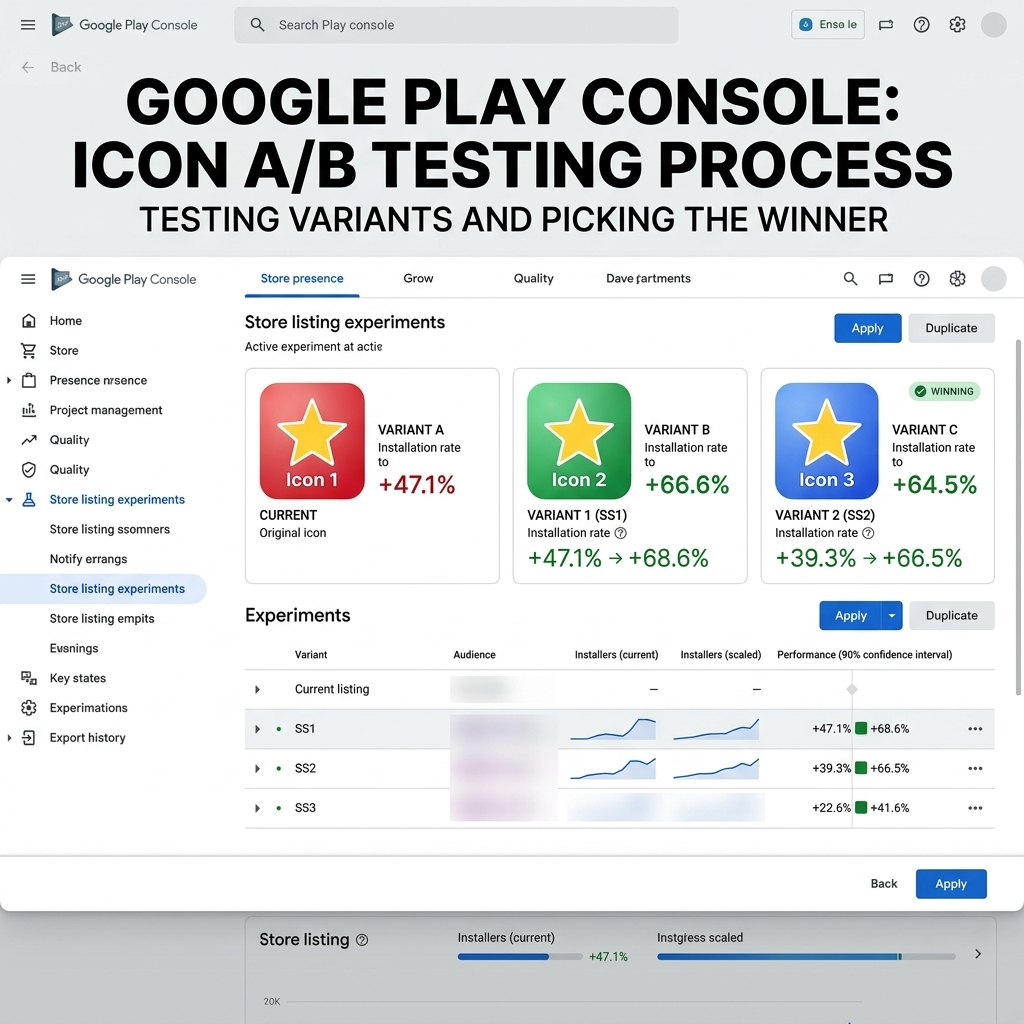
Step 10: Run controlled A/B tests
Test one major variable at a time — an icon variant, the first screenshot message, the subtitle wording, or video vs no video. This makes results interpretable and repeatable.
Step 11: Measure the full funnel, not just installs
Track both acquisition and quality: impressions → taps → installs, then retention and engagement, then revenue and LTV if the app is monetized.
High installs with poor retention are not an ASO win.
Step 12: Iterate monthly
ASO is a system, not a one-time task. Run this cycle every month — compounding improvements beat one big redesign.
ASO cycle
Practical example: a habit tracker app
Flip the switch to see how the listing changes after optimization:
Expected pattern after the update:
- Keyword relevance improves first.
- Impressions and taps increase next.
- Conversion and organic installs rise after creative optimization.
Benefits and limitations of ASO
- Sustainable organic growth
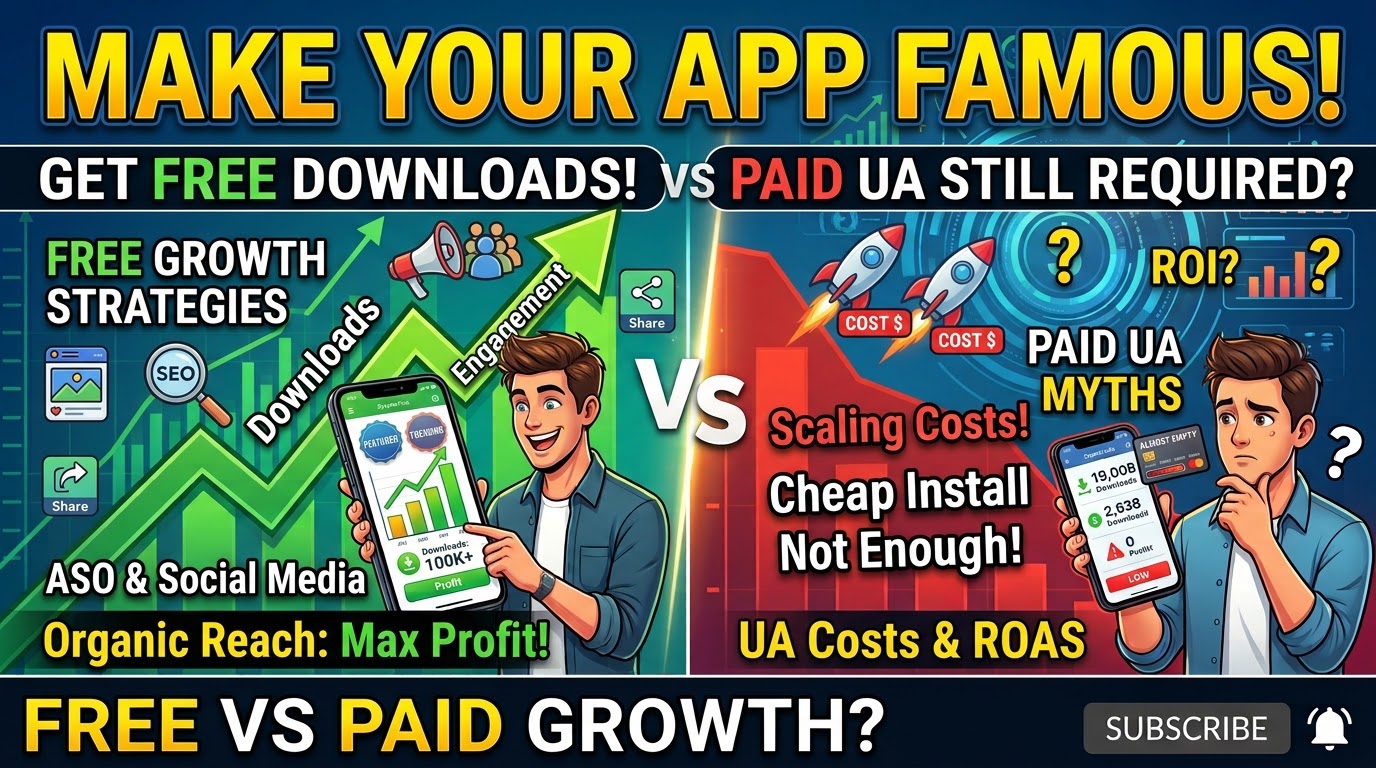
- Lower dependency on paid acquisition
- Better-fit users from intent-based search
- Stronger long-term acquisition economics
- Results are not instant
- Requires continuous iteration
- Competitive categories take longer
- A weak product experience caps performance
Your ASO checklist
Tick off each step as you complete it — your progress is saved in this browser.
Final takeaway
ASO is the SEO discipline of app growth. Apply it systematically and you improve visibility, conversion and retention together — which is how apps rank, and stay ranked.
Over to you 👇
💬 Which step is your app stuck on right now? Tell me in the comments.
👥 Know someone launching an app? Send this guide to them.
♻️ Found it useful? Share it with your team.